
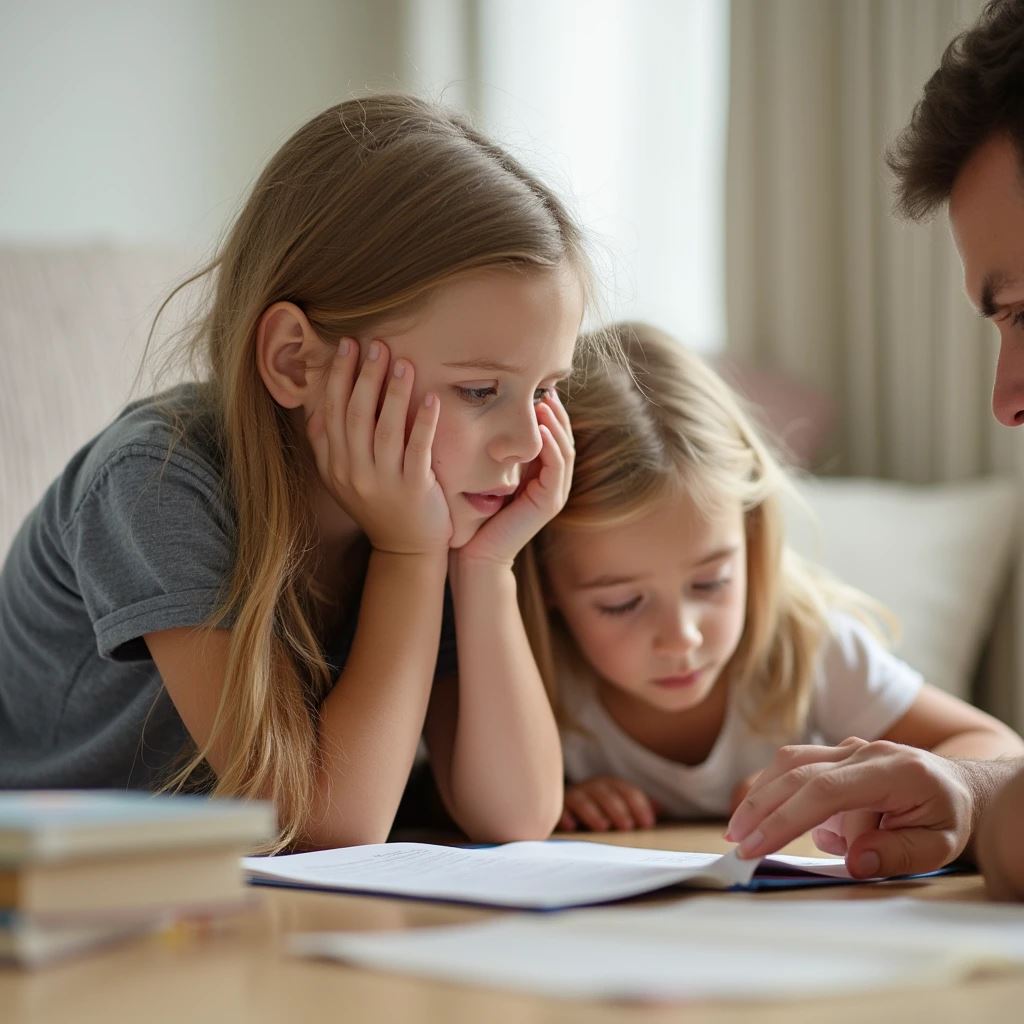
The Implications of Children’s Behavioral Problems on Relationships
Children’s behavioral problems can significantly impact the parents’ relationship. When a child faces issues such as attention deficit hyperactivity disorder, depression, anxiety, or any other problem that affects their behavior and functioning, the parents’ relationship may suffer.
Children’s problems can lead to difficulties in the parents’ relationship when there is disagreement between them regarding how to handle the issue or the appropriate approach to deal with it. Discussions and disagreements about treatment, support, or approach to the problem can cause conflicts between the parents, which can negatively impact their relationship.
Children are the central factors in coping with behavioral problems and their impact on relationships
Dr. Roni Cohen – Family Psychologist

Additionally, when a child is in a situation of significant problem, parents may face high levels of stress and worry about their child’s future. This can create tension and fatigue between the parents, leading to difficulties in supporting each other and connecting as a couple.
Therefore, it is important to understand that coping with children’s behavioral problems requires mutual support and close collaboration between both parents. The importance of shared support, managing conflicts constructively, and understanding shared responsibilities can help improve relationships and family stability.
2. How to Support Each Other When Dealing with Children’s Behavioral Problems
When a couple is better off dealing with children’s problems together, it is important to focus on proper support and understanding. Here are some ways to support each other when dealing with children’s behavioral problems:
1. Good Communication: Communication is central between partners. It is important to understand each other’s perspectives and progress in the right direction to find a solution.
2. Collaboration: A couple that collaborates effectively together can deal more efficiently with children’s problems. Each can bring their skills and knowledge to the table and help find solutions.
3. Focus on Love and Understanding: It is important to feel supported and loved by your partner when dealing with children’s problems. Warm and attentive relationships can ease the situation and help find solutions.
At the end of the day, couples going through such a process will be ready to face any problem that arises and deal with it as a strong and united couple.
3. Problem-Solving Processes and Coping with Children’s Behavioral Problems
Coping with children’s behavioral problems can be challenging and fascinating at the same time. When a child faces behavioral problems, it is essential to consider three main factors: the child themselves, the parents, and the environment in which they grow up. To solve children’s behavioral problems, it is important to understand the factors influencing them and act accordingly.

One of the ways to cope with children’s behavioral problems is through psychological treatment. This treatment may include sessions with children and parents, social skills training, and strategies to improve interpersonal communication and understanding. Additionally, there are group processes in which children and parents participate together and deal with problems collectively.
Alongside psychological treatment, it is important to promote children’s coping abilities and self-solutions. This includes developing social skills, emotional management, and coping with stressful situations or pressures. Children who develop these skills may cope more efficiently with behavioral problems and develop positively.
Open and prepared communication can facilitate coping with children’s behavioral problems and strengthen the couple’s relationship
Shira Cohen – Family Communication Specialist
Moreover, emphasis should be placed on connection and support from parents and family. When parents understand the needs of their children and provide them with emotional and physical support, they can help them cope with problems and feel empowered and supported.
In conclusion, it is important to remember that coping with children’s behavioral problems is a long and ongoing process. We must be patient and understand that every child and family can cope with the challenges and grow from the not-so-simple experiences they bring.

4. Advice and Tools to Strengthen Relationships When Dealing with Children’s Behavioral Problems
When a couple deals with children’s serious problems, various emotions and great mental pressure may arise. It is important to remember that a strong relationship can help each partner to cope with the situation healthily and constructively.
Here are some tips and tools that can help strengthen relationships when dealing with children’s significant problems:
1. Open and Honest Communication – It is important to discuss feelings, needs, and hopes of each partner openly and honestly. Open dialogue can help the couple understand different perspectives and find common solutions.
2. Support and Understanding – Showing support and understanding to each other throughout the process is essential. A supported couple may feel stronger and cope more efficiently.
3. Collaboration – Remember that a couple is a team, and collaboration between them can lead to more successful results. Teamwork can assist in developing shared solutions and dealing with challenges.
4. Quality Time Together – It is essential to find quality time together without children and without other tasks on the table. This time can boost the couple’s morale and strengthen their bond.
5. Boundaries and Management – It is crucial to set clear boundaries and ensure proper management regarding children’s significant problems. Dialogue on boundaries and commitment to them may prevent conflicts and unwanted categorization between the couple.
In conclusion, it is important to remember that relationships require constant attention and investment. With the right advice and tools, a couple can strengthen their bond and deal together with the challenges that come with children’s significant problems.
The Impact of Dealing with Children’s Behavioral Problems on Couple Communication
Dealing with children’s behavioral problems can severely affect couple communication in the relationship system. When parents face difficulties with their children, a deep emotional connection can develop between them, affecting their ability to communicate with each other.
In their childhood, children learn how to behave and communicate based on the example they receive from their parents. When they encounter significant problems, such as learning difficulties, relationships with their friends, or behavior at school, they may turn to their parents for help and support.
The support that parents provide to children in coping with problems can improve their emotional and social abilities, but it can also influence the communication between the parents themselves. When a child deals with a significant problem, parents may take different stances and perceptions regarding the appropriate treatment. This could lead to conflicts and communication difficulties between them.
Understanding children’s psychological needs can contribute to stability and a sense of control over relationship dynamics
Rotem Levi – Couples and Family Psychologist
To prevent damage to couple communication as a result of dealing with children’s significant problems, it is important for parents to tackle the problems collectively and find ways to cope with the challenges together. Moreover, it is crucial for them to focus on supporting and understanding the child’s needs, realizing that supporting them contributes to strengthening the family bond and improving communication between them as a couple.
Guidance and Support for Parents When Dealing with Children’s Behavioral Problems
Children’s behavioral problems can impact not only the child themselves but also the parents’ relationship. During the process of coping with these problems, it is essential to receive professional guidance and support focused on this area.
The guidance and support are intended for parents dealing with children’s behavioral problems and aim to help them cope healthily and efficiently with the situation. The specialist will assist parents in understanding the sources of the problem, identifying the child’s needs and desires, and solving the issue in a way that leads to improvement in the current situation.
During the support, parents will learn how to communicate healthily and effectively with the child and receive tools and strategies to nurture the child’s positive abilities. Additionally, they will receive tools for conflict management, promoting change processes, and creating a supportive and inviting environment for the child’s growth.
At the end of the counseling and support process, parents will be more prepared to cope with children’s behavioral problems and will be able to improve their relationship as a result of successful coping with the situation.